The Overlap Between AI and VR Is No Longer Optional
Virtual reality isn’t new. What’s new is how fast artificial intelligence is pulling it into something that finally feels real. AI is no longer a side tool it’s the backbone behind smarter, faster, and more immersive VR content. It’s rewriting the rules on what’s possible, and making big ideas easier to build.
Smarter systems mean less guesswork. Creators can now prototype environments or interaction loops in hours, not weeks. AI trims repetitive workflows, suggests design tweaks on the fly, and simulates user behavior before a headset even goes on. For VR developers, it’s like having a second brain that doesn’t need coffee breaks.
But the end goal isn’t just speed it’s immersion. Machine learning helps stitch together everything from realistic voice interactions to physics that feel intuitive. It blends the lines between scripted and spontaneous. Instead of guessing what a user might do, AI learns and adjusts. That’s the real bridge between how things look and how they feel.
Bottom line: AI doesn’t replace the vision it makes the vision actually work.
Smarter, Adaptive Virtual Worlds
In the early days of VR, environments felt more like dioramas nice to look at, but static. Today, AI is changing that. Non playable characters (NPCs) and in game worlds now react in real time, learning and shifting based on user behavior. That means if you hesitate in a conversation or throw an object into a crowd, you’re not just triggering scripted responses. You’re influencing an ecosystem that’s paying attention.
Procedural generation is also getting a serious upgrade. AI models now stitch worlds together with logic and purpose, not just randomness. Instead of endless corridors or copy pasted forests, we’re getting terrain and structures that serve a narrative, support gameplay, or reflect emotional tone. It’s worldbuilding that feels intentional.
Then there’s emotional context arguably the most human leap of all. AI can now recognize cues from your voice, movements, or even head turns and generate NPC responses that make sense emotionally. If you’re tense, the AI might escalate a situation. If you’re relaxed or disengaged, it might shift tone or path. Simulations begin to feel less like a game and more like a living environment.
Bottom line: AI isn’t just making virtual worlds bigger. It’s making them smarter alive in a way that adapts to you in the moment.
Boosting Content Creation And Cutting Development Time
Virtual reality studios are under constant pressure to deliver immersive, high quality worlds faster than ever. This is where artificial intelligence shifts from a helpful tool to a game changing force.
AI Is Rewriting Production Speeds
Traditional VR development can be time intensive and resource heavy. But with AI, many of those slow moving bottlenecks animation sequencing, voiceovers, and environmental design are now being streamlined or eliminated altogether.
Automated modeling: AI tools can generate 3D assets instantly based on text based or sketch input
Faster prototyping: Simulation environments adapt in real time, letting developers test and iterate immediately
Smarter QA: AI systems can flag inconsistencies or rendering issues well before human testers catch them
What AI Is Automating Right Now
From the earliest conceptual phases to final polish, AI is replacing repetitive tasks across the pipeline:
Voice synthesis: Creators can produce natural, multilingual voice overs without booking talent
Facial and body animation: AI maps believable expressions and gestures using minimal input
Scene scaling: Large scale environments are procedurally generated based on a designer’s rules
Lighting and texture automation: Neural networks fine tune materials and lighting to suit aesthetic goals
These capabilities aren’t just theoretical they’re being used daily to reduce development cycles and production budgets.
Want to See AI Tools in Action?
Discover how today’s creators are integrating AI into their pipelines:
Explore the latest in AI powered VR tools
Personalization at Scale

AI isn’t just making VR smarter it’s making it personal. Instead of one size fits all simulations, headset experiences now evolve in real time, shaped by user behavior, voice cues, or even emotional signals. The system watches how you move, react, and engage, then adjusts the world around you on the fly. Nothing static, nothing generic.
In a training scenario, that might mean shifting difficulty as the user grows more competent. For someone in therapy, it could adapt by offering calmer environments or responding to stress levels. In a learning setting, educational content pivots based on how well the user understands or struggles, progressing at exactly the right speed.
The core idea: AI isn’t just powering VR. It’s tuning it to fit the moment, the user, and the goal. So with one headset, you don’t just run one program. You unlock infinite versions of it each one uniquely designed for who you are and what you need.
More Real Than Real: Visual Fidelity and Physics
AI isn’t just making VR better it’s making it sharper, faster, and more believable. Real time rendering is getting a major upgrade with AI driven upscaling and image enhancement. That means fewer jagged textures, smoother lighting, and overall visuals that feel a generation ahead, without the system lag. These improvements don’t just look good they help users stay immersed longer, since the disconnect between virtual and real fades with sharper detail.
But visuals are only half the story. Neural engines are now powering in game physics that feel less like pre scripted routines and more like the real world reacting to you. Surfaces bounce or crumble based on believable weight and impact. Water flows, smoke disperses, and gravity behaves in a way that tells your brain this isn’t just animation something real is happening here.
Add smarter eye tracking and predictive input to that mix, and the feedback loop tightens. VR systems can now anticipate where you’re looking and what you might do next. Hand gestures get picked up faster. Buffer time shrinks. The end result? Movement in these newer gen virtual worlds starts to feel eerily natural.
AI’s influence isn’t flashy here it’s functional. But for users in the headset, the difference is immediate and powerful. This is what immersion looks like when code gets smart.
Next Gen Interactivity
The way we interact in VR is breaking out of the joystick zone. Thanks to natural language processing, users can now move through virtual spaces and trigger actions just by speaking. That means voice commands aren’t just for menus anymore they’re becoming core to how people explore, build, and communicate inside immersive worlds.
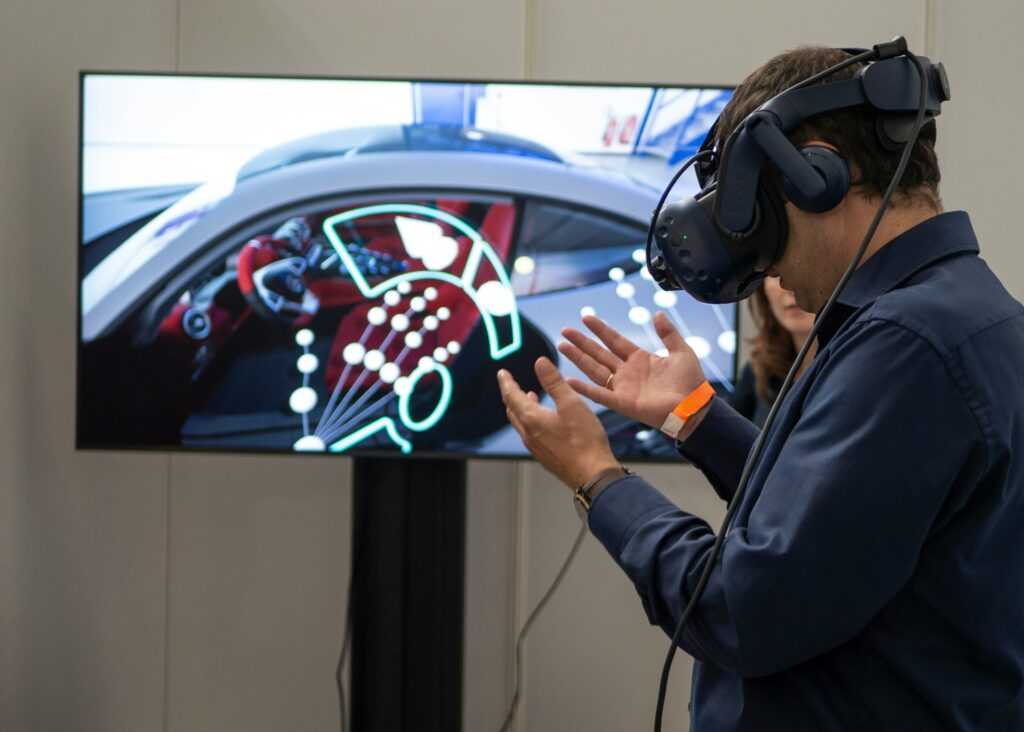
At the same time, gesture tracking is getting a silent upgrade. Traditional VR setups often require bulky gloves or external sensors to track hand movement with any accuracy. But with AI in the loop, systems are starting to learn from camera feed alone no wires, no gloves, no extra gear. It’s smoother, more intuitive, and a lot less clunky.
All of this adds up to a bigger shift: user interfaces aren’t static anymore. Instead of navigating tiled menus stuck in space, users interact with responsive environments that shift based on what you’re doing or saying. The interface becomes part of the world a flexible, living system powered by machine learning.
More on this evolution at AI powered VR tools.
The Road Ahead
As AI continues to shape the VR landscape, the next challenge isn’t capability it’s responsibility. Ethical design matters more than ever. The best creators aren’t just chasing realism or automation; they’re building systems that surface how decisions are made. When an AI suggests a training regimen or adjusts an interactive narrative, users should understand the ‘why’ behind it. Transparency isn’t a nice to have. It’s table stakes.
In enterprise, this means products that explain their logic in high stakes sectors like healthcare, aviation, or law enforcement. In entertainment, it’s about giving users agency, not manipulation. Immersion shouldn’t blur consent. And across the board, it’s designing smarter: systems that value clarity, adaptability, and user wellbeing over feature bloat.
AI and VR together don’t mean doing more they mean doing better. Look out for applications that evolve in real time based on real human input, fine tuned by AI but always grounded in ethical intent. It’s not just the future. It’s the direction we need now.